
DATA AND AI ARE CHANGING THE WAY ORGANIZATIONS THINK, DECIDE, AND ORGANIZE. IT’S TIME HUMANITIES, MANAGEMENT AND SOCIAL SCIENCES GET INVOLVED.
Metalab

NEWS

Lorem ipsum dolor sit amet, consectetur adipiscing elit, sed do eiusmod tempor incididunt ut labore et dolore magna aliqua. Ut enim ad minim veniam, quis nostrud exercitation ullamco laboris nisi ut aliquip ex ea commodo consequat. Duis aute irure dolor in reprehenderit in voluptate velit esse cillum dolore eu fugiat nulla pariatur. Excepteur sint occaecat cupidatat non proident, sunt in culpa qui officia deserunt mollit anim id est laborum.

EVENTS

IDEAS

TOO MUCH OF A GOOD THING? THE DARK SIDE OF COLLABORATION IN REGIONAL INNOVATION NETWORKS

by Elisa Operti - Professor of Strategy and Network Analysis courses in various programs (MS, Executive, PhD) at ESSEC Business School.

Abstract

The study by Elisa Operti and Amit Kumar focuses on the impact of collaborative efforts on innovation and entrepreneurship within regional contexts. In this case, they examined the Hauts-de-France region's efforts to promote collaboration among local entrepreneurs, private firms, and universities and analyzed the paradoxical outcomes observed.

The research introduced a typology of regional collaboration networks based on two key factors: internal brokerage and the number of collaboration ties outside the region. This led to the identification of four archetypes: "fortress," "playing field," "absorber," and "multilevel brokerage."

The study collected data on collaboration networks between inventors within and between U.S. municipal areas and explored how these structures affected regional innovation output. Surprisingly, the findings indicated that while both internal and external collaboration ties are beneficial, it is challenging for innovators in a region to handle both types simultaneously. As a result, "playing field" or "absorber" configurations often proved more conducive to innovation than "fortress" or "multilevel brokerage."

The counterintuitive results could be attributed to cognitive and information overload associated with multilevel brokerage. Managing diverse local and distant collaborators can strain the innovators' resources and attention. Additionally, innovators who build local bridges while engaging in external initiatives may face conflicting demands and organizational cultures, which can affect their motivation and implementation capacity.

The study has several policy implications:

  1. Policymakers should recognize that one-size-fits-all approaches do not apply to all regions. What works in one successful region may not have the same benefits in another. Policymakers should assess the readiness of regional innovators and entrepreneurs for collaboration.
  2. More is not always better when it comes to collaborative incentives. Policymakers should be mindful of knowledge overload and hidden costs associated with offering too many research incentives simultaneously. Instead, they should focus resources on selected incentive programs around well-defined local and national priorities.
  3. Policymakers should plan for the long term. Local and global connections can be leveraged effectively, but policymakers should consider prioritizing internal brokerage first. Once regional networks are established, they can encourage national and international connections.

For innovators and entrepreneurs, the research provides valuable insights:

  1. Map the innovation landscape around you. Understand the nature of your regional network and whether it is cohesive or relies heavily on external connections.
  2. Create value by fostering new connections based on your regional network's characteristics. Decide whether to focus on local collaborations or external connections.
  3. Avoid overextending yourself. Be selective in choosing collaboration opportunities and manage the challenges that may arise from multiple collaborators' conflicting demands.

[To read the full article please follow this link.]

Ideas list
WHY PROTECTING CREATORS PROTECTS AI

WHY PROTECTING CREATORS PROTECTS AI

[Student IDEAS] by Karen Taubenberger and Michelle Diaz - Master in Management at ESSEC Business School Abstract This article explores ...
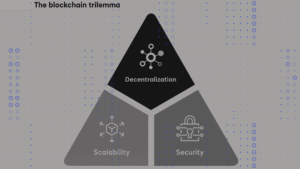
WHAT’S STOPPING BANKS FROM FULLY EMBRACING BLOCKCHAIN?

WHAT’S STOPPING BANKS FROM FULLY EMBRACING BLOCKCHAIN?

[Student IDEAS] by Varun Jain - Master in Management at ESSEC Business School Abstract This article examines why banks have ...
BALANCING TECHNOLOGY AND HUMAN INTERACTION IN LUXURY HOSPITALITY

BALANCING TECHNOLOGY AND HUMAN INTERACTION IN LUXURY HOSPITALITY

[Student IDEAS] by Minseo Ku - Global BBA at ESSEC Business School Abstract This article explores how luxury hotels can ...
GO GENTLE INTO AN AI HIGH-STAKES ERA: BUILD A POSITIVE HUMAN-AI COLLABORATION LOOP FIRST

GO GENTLE INTO AN AI HIGH-STAKES ERA: BUILD A POSITIVE HUMAN-AI COLLABORATION LOOP FIRST

[Student IDEAS] by Dan Xiao - Master in Data Sciences & Business Analytics at ESSEC Business School & CentraleSupélec Abstract ...
Founded in 2020 by ESSEC Business School, The Metalab Institute for Artificial Intelligence, Data and Society helps organizations navigate and better understand the social, economic, cultural, and ethical impacts of AI and data

metalab@essec.edu

Learn more about the Metalab Institute

copyright © 2026 metalab Institute

arrow-right
Résumé de la politique de confidentialité

Ce site utilise des cookies afin que nous puissions vous fournir la meilleure expérience utilisateur possible. Les informations sur les cookies sont stockées dans votre navigateur et remplissent des fonctions telles que vous reconnaître lorsque vous revenez sur notre site Web et aider notre équipe à comprendre les sections du site que vous trouvez les plus intéressantes et utiles.