

DATA AND AI ARE CHANGING THE WAY ORGANIZATIONS THINK, DECIDE, AND ORGANIZE. IT’S TIME HUMANITIES, MANAGEMENT AND SOCIAL SCIENCES GET INVOLVED.
Metalab

NEWS

Lorem ipsum dolor sit amet, consectetur adipiscing elit, sed do eiusmod tempor incididunt ut labore et dolore magna aliqua. Ut enim ad minim veniam, quis nostrud exercitation ullamco laboris nisi ut aliquip ex ea commodo consequat. Duis aute irure dolor in reprehenderit in voluptate velit esse cillum dolore eu fugiat nulla pariatur. Excepteur sint occaecat cupidatat non proident, sunt in culpa qui officia deserunt mollit anim id est laborum.

EVENTS

RESEARCH

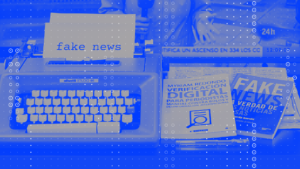
MAPPING INFORMATION AND IDENTIFYING DISINFORMATION BASED ON DIGITAL HUMANITIES METHODS: FROM ACCURACY TO PLASTICITY

[ARTICLE] This paper highlights the discursive dimension of Fake News, emphasizing the processes of turning information into discourse and constructing social reality, rather than focusing on the true/false perspective.

by Julien Longhi (ESSEC Business School)

The subject of Fake News has recently become very popular, with many articles, reports, and even academic events taking up this subject. However, media coverage remains generally quite superficial and the topic is often approached from the viewpoint of the ‘accuracy’ of the information. In this article, I would like to highlight the discursive dimension, which I believe to be crucial when looking at Fake News. I will therefore seek to approach this issue not from a true/false perspective, but rather by considering the processes of turning information into discourse, of handling and constructing social reality or referents. To this end, I shall first outline the contribution that the digital humanities can make to the analysis of meaning in corpora, and the way in which they can provide a means to objectively access interpretative processes within the information conveyed.


[Please read the research paper here]

Research list
USING DIGITAL HUMANITIES AND LINGUISTICS TO HELP WITH TERRORISM INVESTIGATIONS

USING DIGITAL HUMANITIES AND LINGUISTICS TO HELP WITH TERRORISM INVESTIGATIONS

[ARTICLE] This article addresses the digital transformation of forensic science by using a tool-based linguistic analysis within the digital humanities ...
AN EMPIRICAL APPROACH TO UNDERSTANDING USERS' FAKE NEWS IDENTIFICATION ON SOCIAL MEDIA

AN EMPIRICAL APPROACH TO UNDERSTANDING USERS' FAKE NEWS IDENTIFICATION ON SOCIAL MEDIA

[ARTICLE] This study explores factors influencing social media users' identification of fake news, finding that expertise in social media use ...
SOCIAL COMMERCE AND THE HEDONIC UTILITARIAN NEXUS

SOCIAL COMMERCE AND THE HEDONIC UTILITARIAN NEXUS

[ARTICLE] This study investigates the relationships between hedonic and utilitarian motivations and social commerce purchase intentions. by Karine Aoun Barakat (ESSEC ...
FAKE NEWS DETECTION AND SOCIAL MEDIA TRUST: A CROSS-CULTURAL PERSPECTIVE

FAKE NEWS DETECTION AND SOCIAL MEDIA TRUST: A CROSS-CULTURAL PERSPECTIVE

[ARTICLE] This paper explores the factors influencing fake news detection and trust in social media across cultures. by Karine Aoun Barakat (ESSEC ...
Founded in 2020 by ESSEC Business School, The Metalab Institute for Artificial Intelligence, Data and Society helps organizations navigate and better understand the social, economic, cultural, and ethical impacts of AI and data

metalab@essec.edu

Learn more about the Metalab Institute

copyright © 2026 metalab Institute

arrow-right
Résumé de la politique de confidentialité

Ce site utilise des cookies afin que nous puissions vous fournir la meilleure expérience utilisateur possible. Les informations sur les cookies sont stockées dans votre navigateur et remplissent des fonctions telles que vous reconnaître lorsque vous revenez sur notre site Web et aider notre équipe à comprendre les sections du site que vous trouvez les plus intéressantes et utiles.